DevOps Study app: GitHub Actions- Back-end Part 2
Table of Contents
We going to continue were we left and push the last adds, and on GitHub we going to see a new pull request that will run with an error:
Run marocchino/sticky-pull-request-comment@v2
Error: Resource not accessible by integration
Which mean it tries to write to the repository but don’t have the permission for it.
Repository settings –> Actions –> General –> –> Actions permissions –> Allow all actions and reusable workflows. –> ## Workflow permissions –> Read and write permissions.
Now if we go to Actions –> The last job –> re-run jobs –> re-run failed jobs.
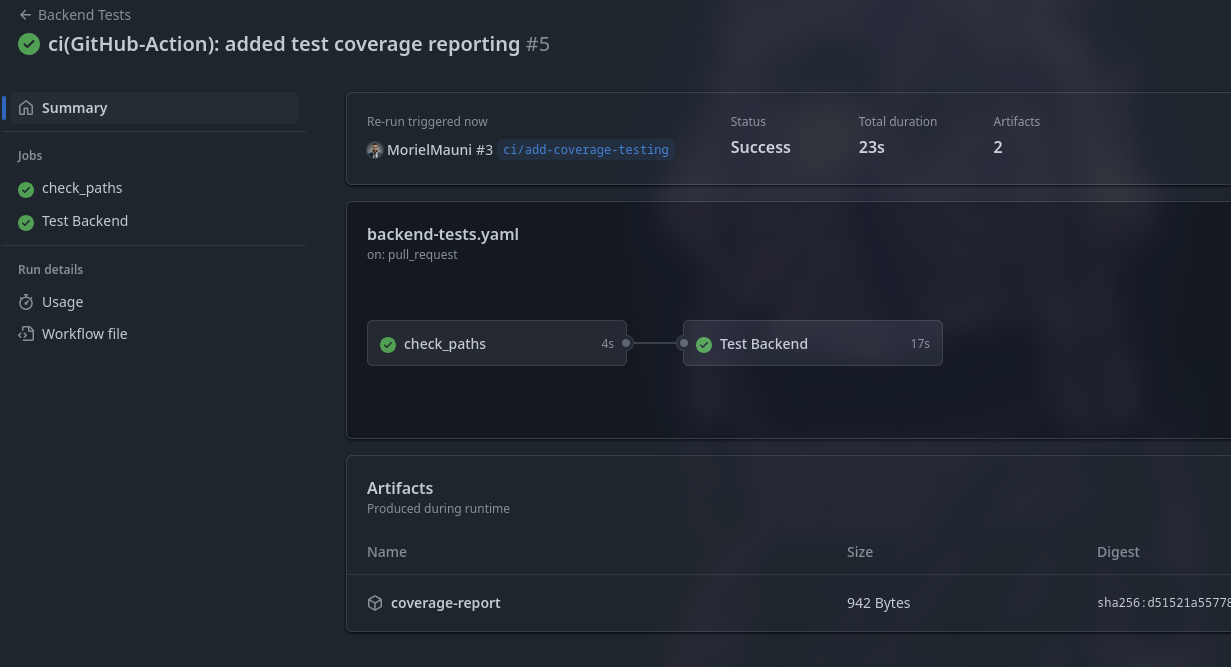
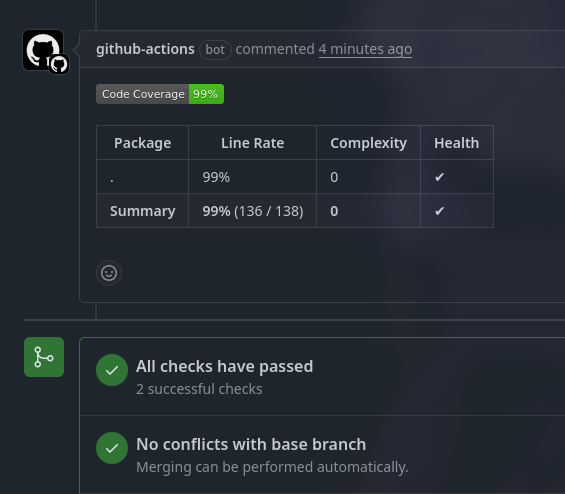
Let’s “Squash and merge” it.
Developer dependencies
Let’s switch to main and pull.
git switch main && git pull
Now if we will create a new image with:
TAG=05 && docker build -t backend:$TAG .
We can see the new image is 95 MB when the last one was 56 MB. Why have this is a bigger image? because we added some dependencies.
If we will look in /src/backend/pyproject.toml we can see there are some dependencies we don’t use any more:
dependencies = [
  "fastapi>=0.115.13",
  "httpx>=0.28.1",
  "pytest>=8.4.1", # We don't use anymore
  "pytest-asyncio>=1.0.0", # We don't use anymore
  "pytest-cov>=6.2.1", # We don't use anymore
  "ruff>=0.12.1", # We don't use anymore
  "uvicorn>=0.34.3",
]
We can add the dependencies as this:
uv add pytest pytest-asyncio pytest-cov ruff --dev
And the pyproject.toml will look like this:
[project]
name = "study-tracker-backend"
version = "0.0.0"
description = "Backend API for tracking study time for DevOps certifications"
readme = "README.md"
authors = [{ name = "Moriel Mauni", email = "morielmauni@gmail.com" }]
requires-python = ">=3.13"
dependencies = ["fastapi>=0.115.13", "httpx>=0.28.1", "uvicorn>=0.34.3"]

[project.scripts]
study-tracker-api = "backend.main:main"

[tool.pytest.ini_options]
asyncio_default_fixture_loop_scope = "function"

[tool.hatch.build.targets.wheel]
packages = ["src/backend"]

[build-system]
requires = ["hatchling"]
build-backend = "hatchling.build"

[dependency-groups]
dev = [
    "pytest>=8.4.1",
    "pytest-asyncio>=1.0.0",
    "pytest-cov>=6.2.1",
    "ruff>=0.12.2",
]
Now we need to edit the Dockerfile this line: On creating the virtual environment:
uv sync --locked --no-editable --no-dev
If we create a new image, we can see that the image is back to 56 MB.
Let’s:
docker compose up --build
Scan with Trivy
We want Trivy to scan out image as part of the steps in /.github/workflows/backend-test.yaml
First: We need to build the docker image:
- name: Build Docker image
  run: docker build -t backend-app:latest .
Scan with Trivy:
- name: Run Trivy vulnerability scanner
  uses: aquasecurity/trivy-action@0.30.0
  with:
    image-ref: "backend-app:latest"
    format: "table"
    exit-code: "0"
    # exit-code: '1' # Fail the workflow if vulnerabilities are found.
    ignore-unfixed: true
    vuln-type: "os,library"
    severity: "CRITICAL,HIGH"
We going to commit, push, squash and merge.